
We would love to learn about your project and if you feel The Chameleon Agency might be the right agency to support you. Please get in touch for a no obligations chat to see if we’re right for each other.

As event planners, there’s a lot we can learn by experiencing events we haven’t planned ourselves. It’s easy to get so deep into the mechanics of our own delivery – elements like run sheets, vendor calls and AV checks – that we stop seeing events the way an actual attendee would. That’s not a flaw, per se, it’s just what happens when you’re repeated in the hot seat of being the one holding the clipboard.
Stepping into someone else’s event changes your perspective. There’s no stress, you have no stake in the outcome and you’re not required to fix things if it goes wrong. As a guest, you can switch off your “organiser” brain and really start noticing things. Being genuinely open-minded, willing to learn from other specialists (rather than assuming that your way is the only way) is part of what makes an event partner worth working with. It’s the difference between an agency that repeats the same formula and one that’s constantly refining their standards of quality.
This isn’t an exercise in copying what other agencies do. Instead, it’s a means of building a sharper eye for what works, what doesn’t, and why, so that every event we plan afterwards benefits from it.
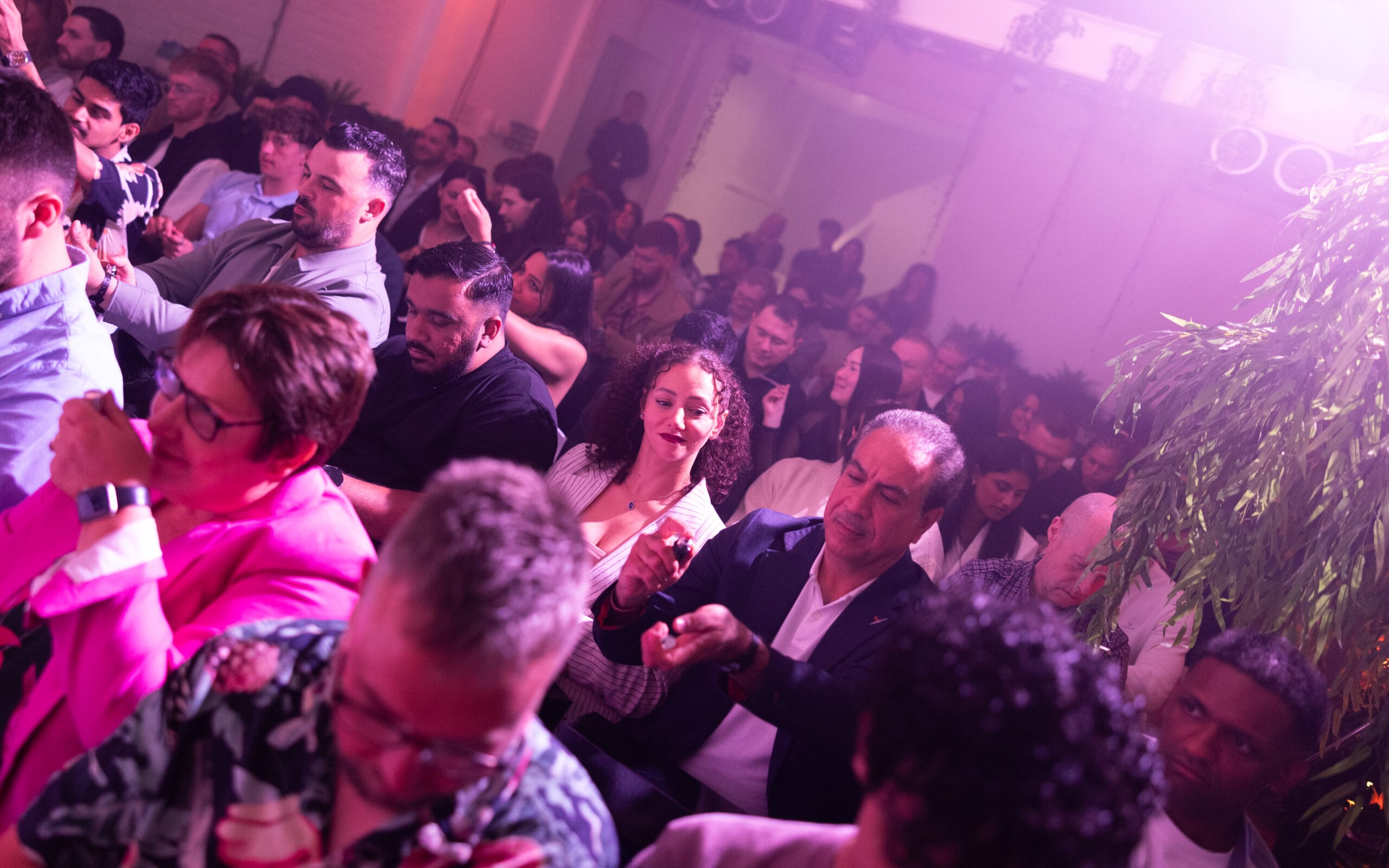
Treat this as time to embrace the experience of the event first-hand. Are you enjoying yourself, has it been a smooth day or have there been glaring causes of frustration throughout? Next time you’re at someone else’s event, take note of how it really feels to sit through ninety minutes of talks with no break. Take a moment to think about whether you can find a bathroom without needing to ask someone. Notice whether the room’s too loud to hold a normal conversation in.
There will be a lot more nuanced things you pick up on, but these are just some top level ideas to get you started and get you in the mindset of an attendee, rather than your default as a planner. The goal here is to leave your ego at the door and pick up new ideas around how to do things better or solidify things you would avoid by learning from others’ mistakes.
Break-to-session changeovers are a great indicator of whether or not an event has good “flow”. If a room fills back up on time without anyone shouting over a PA or an organiser chasing stragglers through the foyer, something was designed to make that happen: a visible countdown, a distinctive audio cue or just disciplined comms from the floor team. If it drags on five or ten minutes every single time, that may be a sign that nobody built a mechanism for it.
We’d rather see one loud chime and a countdown clock doing the work than a member of staff physically rounding people up; one is a system, the other is a favour being called in.
None of this shows up in a feedback survey afterwards. Nobody writes “great use of a countdown clock” on a comment card, but it’s things like this that are often the exact reason an event feels effortless instead of chaotic. Watching someone else’s version of it, without the pressure of having built it yourself, is one of the fastest ways to learn what works.
Both during and after the event, take a moment to ask yourself whether you’re judging the event on vibe, or on whether it genuinely delivered on its promises? Leaving with a simple verdict, good or not good, is a fine personal reaction, but on its own it’s close to useless as professional judgment. It measures how you felt in the room – which is important – but not whether the event did its job, which is the overall objective.
A more useful habit is to run what you’ve seen through the same framework you’d use to evaluate your own events. The Kirkpatrick Model – reaction, learning, behaviour, results – is just as useful turned outward as it is applied to your own work. “Did people enjoy it” only answers the first of those four levels, and it’s the easiest one to fake with good catering and a decent AV budget. The harder, more useful questions are whether attendees could repeat back something they learned an hour later, and whether they’re actually likely to behave differently next week because of it.
Most events, including high-end, high-production ones, never truly get evaluated past level one. That’s precisely why so many are forgettable within a week, however smoothly they run on the day. Getting into the habit of asking the harder questions about someone else’s event is good practice for building them into the brief for your own, right from the proposal stage, rather than as an afterthought in a post-event report nobody reads.
Every sharp observation you have today will be gone by the time you’re back at your desk tomorrow, buried under the fifty emails waiting for you. Don’t trust your memory here, it isn’t good enough, and neither is anyone else’s. Take notes during the day, not on the train home. Photograph anything genuinely well designed, signage, a room layout, a giveaway you’d actually keep. Get the team together within a day or two while it’s still fresh, not whenever the diary happens to clear.
A specific, documented example beats a vague sense that “this sort of thing tends to work” every time you’re briefing a client or defending a design decision. One is a demonstration of cold, hard evidence, while the other is a hunch dressed up as expertise.
There’s an old line in advertising that half of any spend is wasted, the trouble is nobody knows which half. Event giveaways are a decent live test of the same idea, and you don’t need a survey to run it, just watch what people do with their hands on the way out. What gets tucked away with intent, and what gets left on a table or dropped in a bin before they’ve even reached the car park?
Anything that’s clearly filler disappears fast. Anything genuinely useful gets held onto. It’s blunt, but it’s honest, and it’s a habit worth carrying straight into your next budget conversation before you sign off on another box of pens that will just end up discarded somewhere.
One event gives you a handful of observations, which might be useful, but doing this every time you’re a guest somewhere, on purpose, gives you something much more valuable: a constantly updating benchmark for quality across a range of formats, budgets, and audiences. If you make it a habit to attend at least 3 external events per year, you will have an edge like no other and your planning ability and future events will continue to go above and beyond.
None of this replaces proper planning. What it does is build a lived sense of success (or failure), seen from the seats we’re far less likely to sit in once we’re the ones running the show. At Chameleon, that’s part of why we stay open minded about new event types, trends, and ideas, because leaving your ego at the door and learning from other people’s work, good and bad, tends to produce better events than assuming you’ve already got it figured out.
Next time you’re a guest somewhere, treat it as fieldwork, not downtime. Come back with three or four clear observations, structural or logistical, and you’ll have real material for your next brief.
We would love to learn about your project and if you feel The Chameleon Agency might be the right agency to support you. Please get in touch for a no obligations chat to see if we’re right for each other.

Chameleon Agency
Colony, Piccadilly Place,
5 Aytoun St
Manchester
M1 3BR